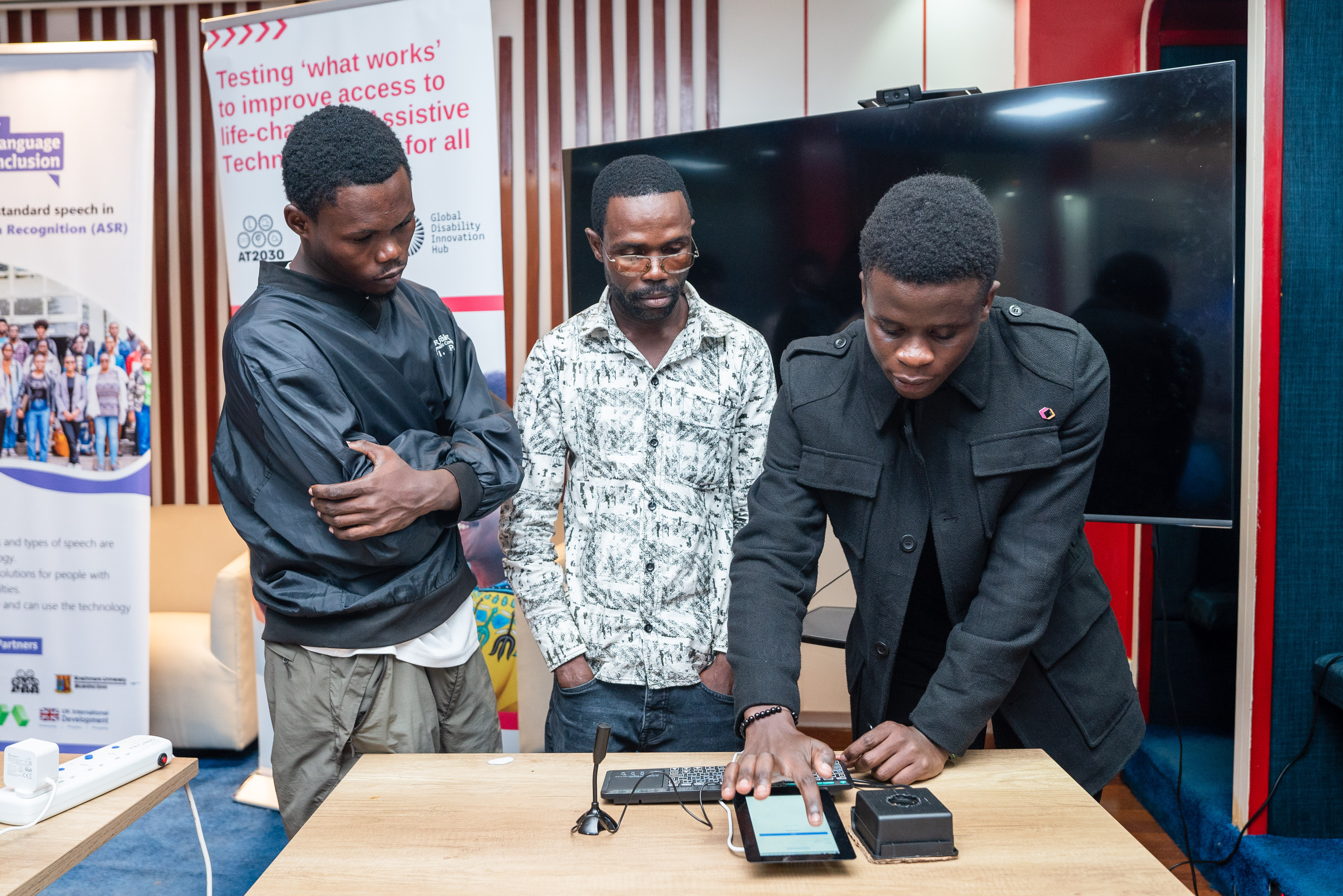
Utter is adaptive speech recognition built for children and adults with atypical and non-verbal speech, trained on Kenyan English and Swahili. It learns each user's unique voice and improves with every session.
Recognised by
Utter exists because the children and adults who need speech technology most are the ones it was never built for. Standard ASR models are trained on narrow, Western speech data. They fail Kenyan English speakers. They fail Swahili speakers. They fail children whose voices do not fit the expected pattern.
We are changing that, starting with Nairobi, with data that reflects how people here actually speak.
A teacher or therapist creates a learner profile in a few minutes. Available on web and as a mobile app, works online and offline, so no classroom gets left out.
Utter has two modes. In Speak, the child's voice is transformed into clear, natural speech and played back instantly using their own cloned voice. In Dictate, speech is converted to text that can be shared across apps and platforms.
The more a child uses Utter, the better it understands them. Starting with 50 short recordings, the personal voice layer begins learning their unique speech patterns and vocabulary, improving with every session.
Built on industry-leading speech models, fine-tuned on real Kenyan English and Swahili speech data. Each learner gets their own lightweight personal layer that lives on their device, so no voice data is ever shared or stored elsewhere.
Available on web and as a mobile app. No IT configuration or hardware needed. A teacher can have a learner up and running in minutes.
Kenyan English and Swahili support from day one, trained on real local speech data rather than adapted from Western models.
Co-designed with special education teachers and speech therapists in Kenya, so it fits how classrooms actually run.
Speak transforms a child's voice into clear speech output in real time. Dictate converts speech to text that can be shared across apps. Teachers choose the mode that fits the moment.
Each learner's personal voice layer stays on their device. No voice recordings shared.
Works without a stable internet connection. Utter runs fully on the device, so it holds up in any classroom across Kenya.






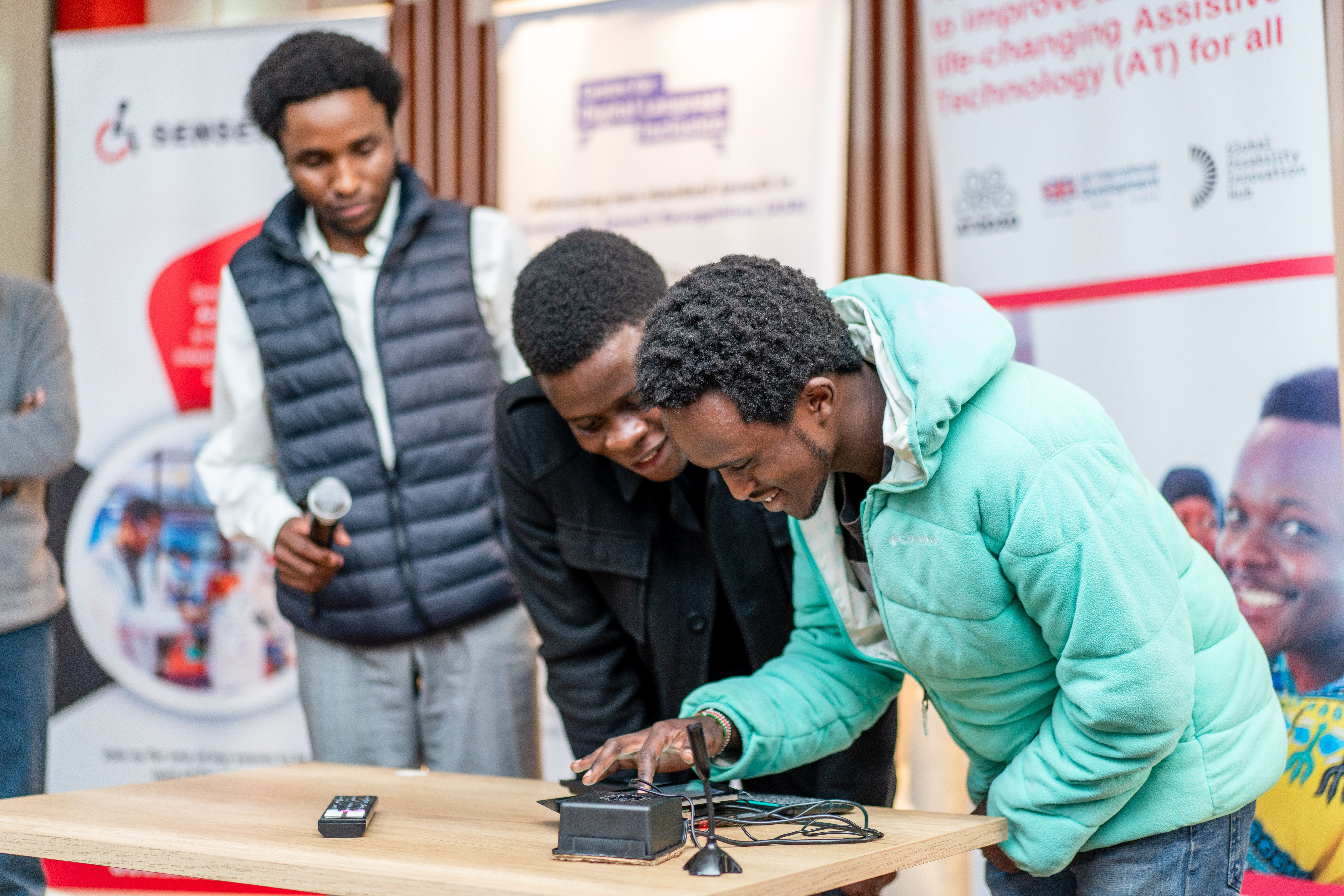
Utter (formerly AlphaTwin) was selected following the KISE Special Needs AI Hackathon, providing mentorship, network access, and early-stage support for the team.
Supporting Utter's needs assessment and early piloting through the Assistive Technology for Development programme.
An Assistive Technology Hub for co-creating solutions with users.
Supporting user testing and live labs for Utter.
Our founding research and co-design partner. CDLI informed the dataset validation and model research for building inclusive speech technologies.
Utter is an active contributor to the African AI research community through Deep Learning Indaba.
GPU inference infrastructure powering Utter's model endpoints in production.
Site of Utter's first public hackathon pitch and an ongoing connection to Kenya's applied AI research community.
Articles, reflections, and updates from the Utter team.
The gap in training data, Kenyan English, and what it means for children who need ASR most.
Reflections from the awareness run with Bloom Garden Academy and the educators we met along the way.
What Jacaranda Special School taught us about building for real classrooms, not just benchmarks.
Whether you are a school leader, therapist, researcher, or investor, we would love to hear from you. Pilot spots are limited.